Moments every front desk knows.
Names are made up; the situations aren't.
12:34 pm, Tuesday
The lunch rush
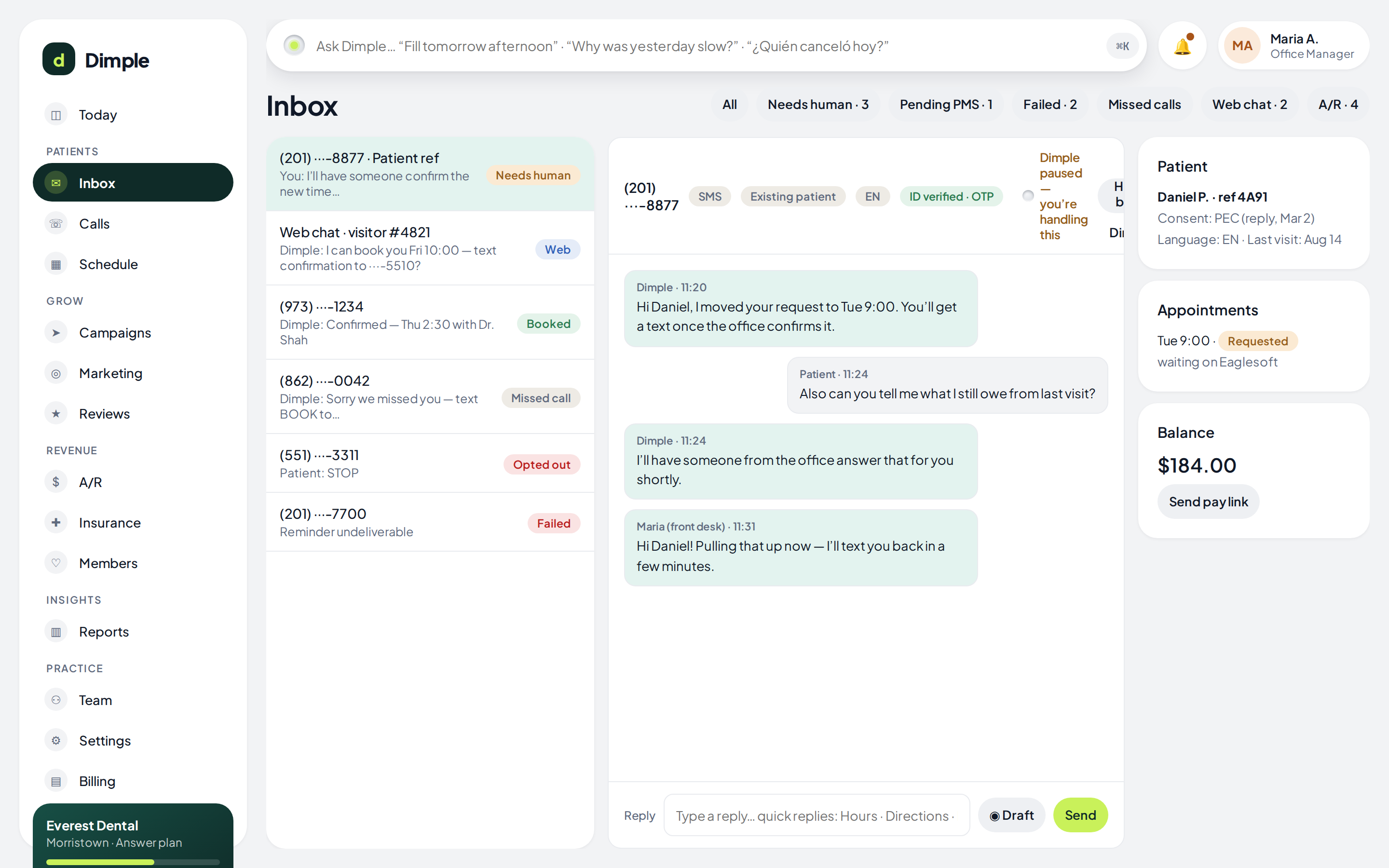
Maria is the only person at the front desk. A patient is checking out, another is signing a form, and the phone rings. She lets it go to voicemail. It's the third one this hour.
The caller was a mom with two kids who needed cleanings before school starts. She didn't leave a message. She called the office down the street, and they picked up.
With Dimple, the phone doesn't ring at Maria at all when she's busy — unless she wants it to. Dimple answers on the first ring, books both kids back to back with the hygienist on Thursday, and texts the mom the details. Maria sees it in her inbox after lunch: two new appointments, one dimple dot next to each.
The next morning: “Dimple booked 2 appointments during lunch yesterday. Nothing needs you.”
7:42 pm, Tuesday
The broken crown
The office closed at 5. Dr. Patel is at his kid's soccer game. A patient bites down on something hard and a crown comes off. She's scared and she calls the only number she has.
It used to ring four times and go to a voicemail that said "if this is an emergency, go to the ER." A crown isn't an ER problem. So she'd search "emergency dentist near me" and become someone else's patient.
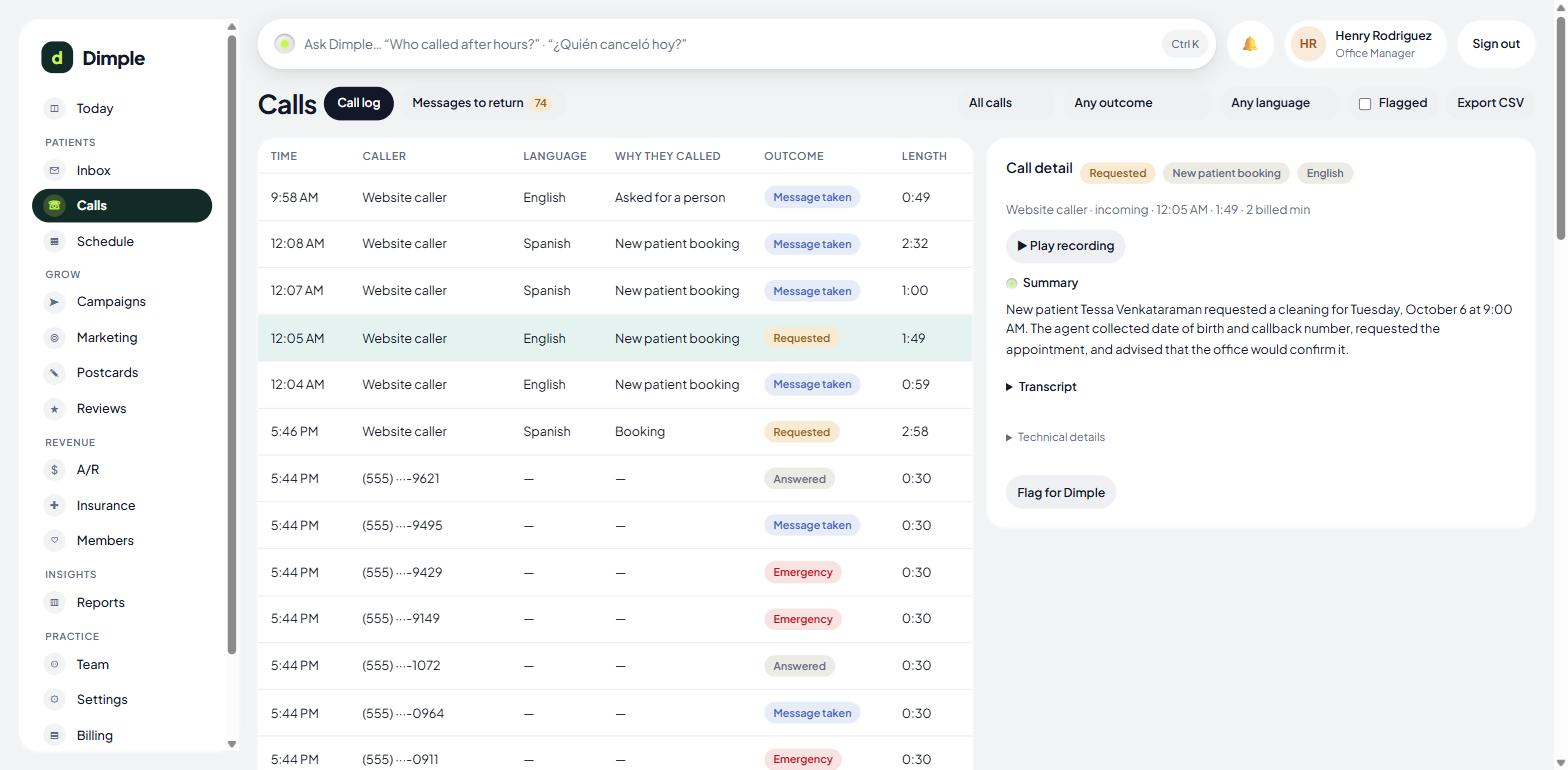
Dimple answers. It says it's an AI, asks what's going on, and reads Dr. Patel's own emergency instructions — not medical advice, just what the office would say. It offers 8:10 tomorrow morning. She says yes. The text with the address arrives before she's put the phone down.
The next morning: “1 emergency call last night. Booked 8:10 with Dr. Patel. Caller reported a lost crown, no bleeding.”
9:15 am, Monday
The Spanish caller
Mrs. Vega has been a patient for six years. Her English is fine for most things, but when she's talking about her mouth and her money, she'd rather speak Spanish. The front desk has one person who can help her, and he's off on Mondays.
Dimple hears her first words and switches. It books her cleaning, explains which insurance the office takes in her language, and texts the confirmation en español. The office sees a note: language: Spanish — so next time, they're ready too.
The next morning: “3 of yesterday's 28 calls were in Spanish. All three booked.”
2:00 pm, Thursday
The quiet drawer
Every practice has one. The treatment plans patients already said yes to — the crown, the implant, the two fillings — that never got scheduled. Life got busy. Nobody called. In a two-doctor practice it's often well over $100,000 sitting in that drawer.
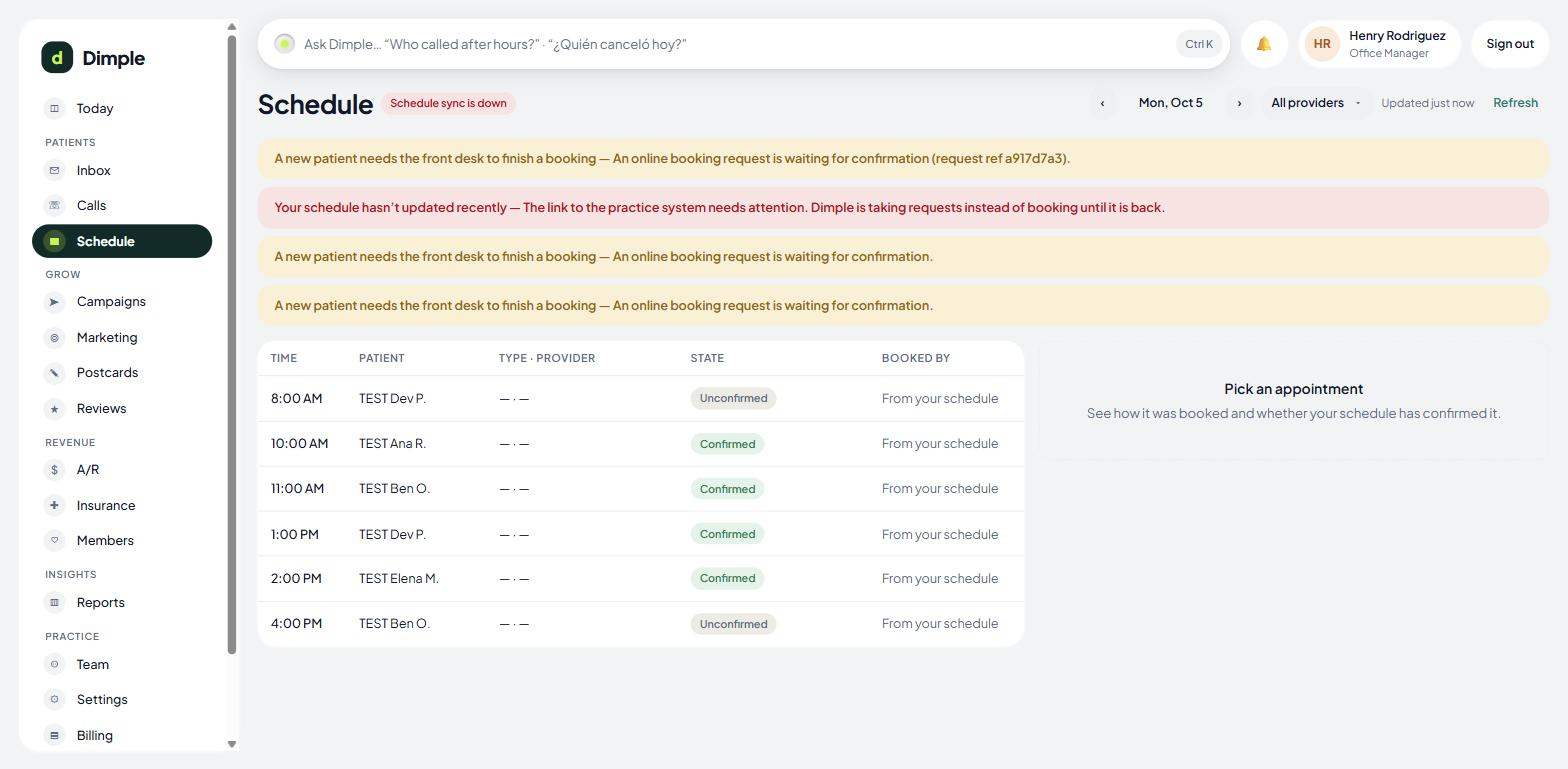
Dimple reads the plans, waits for a reasonable hour, and texts each patient in a way that doesn't feel like a bill: "Hi Daniel, Dr. Lee's office here. Your crown is ready to be scheduled whenever you are — want me to find a time this month?" Three texts over two weeks, then it stops. The ones who say yes book right from the text.
The next morning: “$4,200 of accepted treatment scheduled this week. 11 patients still in the drawer.”
8:02 am, Monday
The morning screen
Denise is the office manager. For years her Monday started the same way: the voicemail light, a stack of sticky notes, and the question "what did we miss?"
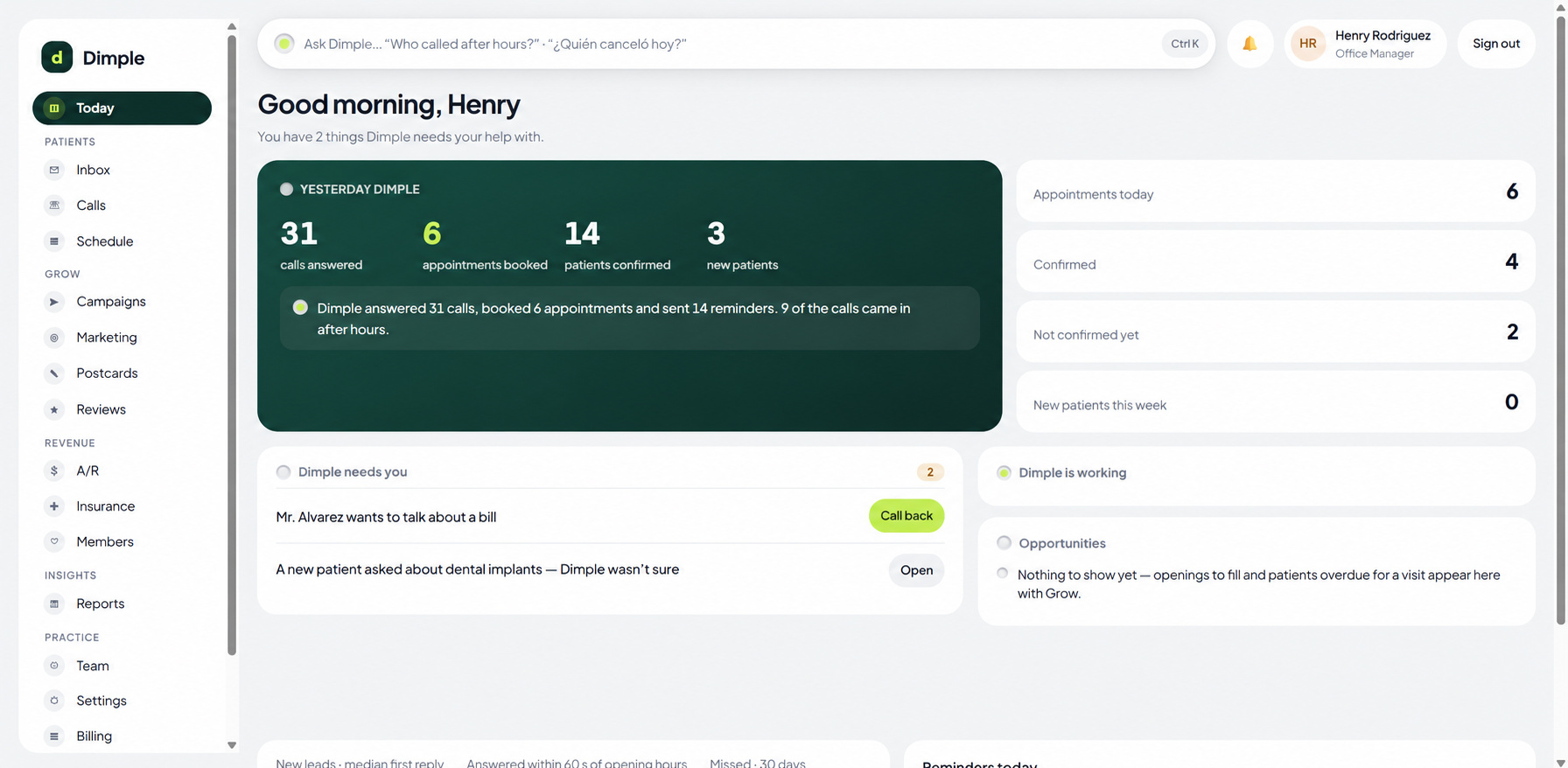
Now it starts with one screen. "Dimple answered 41 calls over the weekend. Booked 9. Sent 23 reminders. Two people need you: Mr. Alvarez wants to talk about a bill, and a new patient asked a question I couldn't answer." She taps the first one, reads the conversation, and calls him back. Then she types: "who cancelled this week?" — and gets the list.
She never took a training class. She just asked.
The next morning: “that was the next morning.”
These are the moments Dimple was built for.
Want to hear it yourself? Call ask.dental.
Founding practices